Showing posts with label Fencing. Show all posts

Sunday, January 21, 2018

Week 3 2018 - The Shearing Shed Yards, Cherries and Basil

This week has been hot and humid, with some amazing thunderstorms and lightning shows. Some days when it was too hot to venture away from the shade and some early mornings to avoid the heat.

Our main task this week has been to build a yard at the back of the shearing shed and to complete the chute. The whole project of building the shed has been going for nearly three years but this week has seen it reach usable status.


The Red Box posts were cut on our other property and while not exactly straight are almost termite proof and so will stay strong in the ground for a very long time.

The next job was to dig holes and put the posts in. The timelapse film below was taken by our Wwoofer on her GoPro and makes us look like fast workers!


Once the posts were in then stays could be fitted with one end notched into the post and one end stopped with a large stone block. When the fence wire is tightened the stay prevents the top of the post being pulled over. Then star pickets were spaced between the posts positioned by a single taut wire. The ringlock fencing wire is ready to be rolled out.


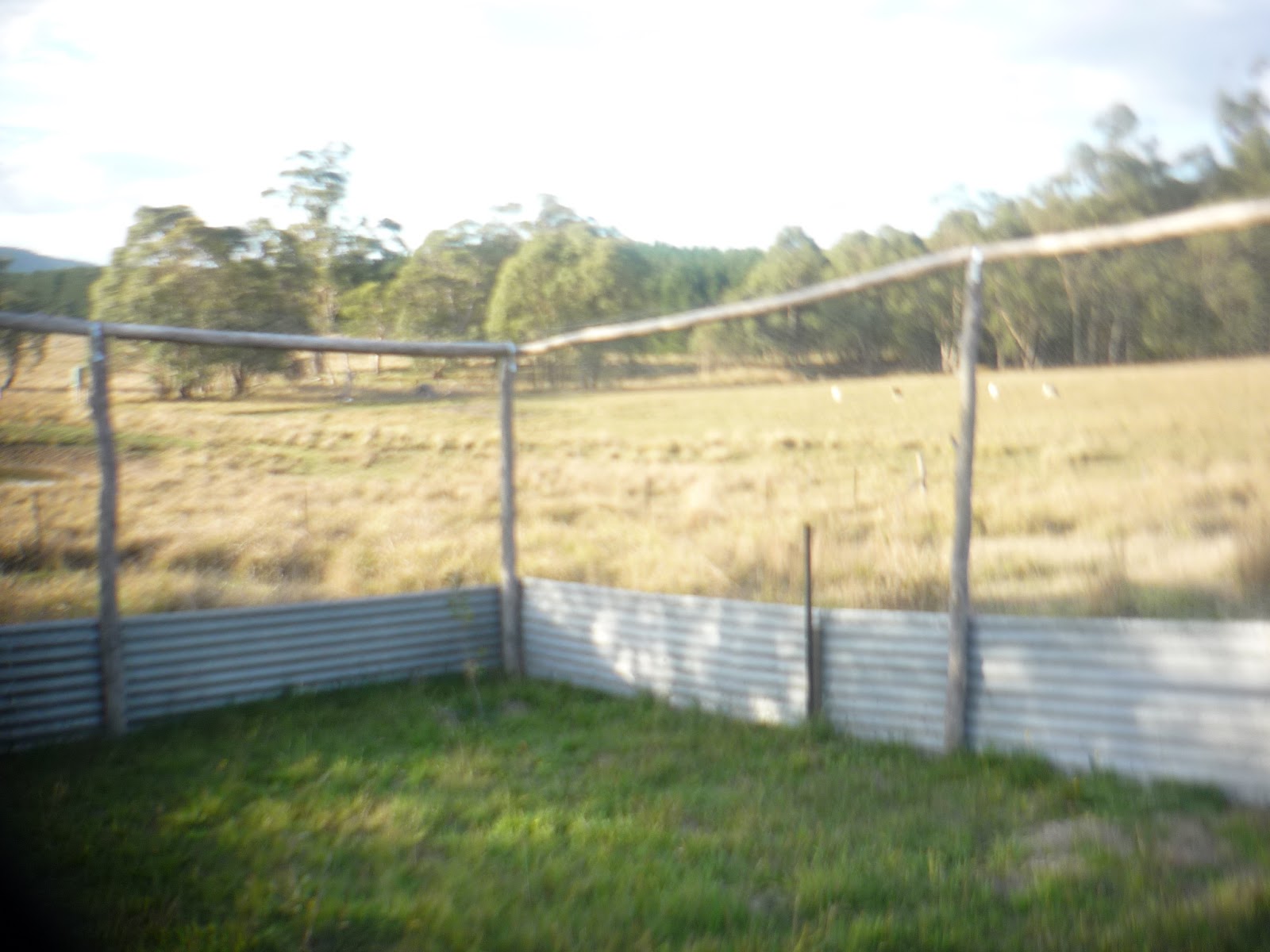
Once the wire was attached then two sides of the shed needed to be slatted to keep the sheep from escaping underneath. The trick was to attach wooden uprights to the side of the concrete stumps and then nail the slats to them. 


This time of year is harvesting and processing. Our neighbour has a cherry tree that was laden and despite nets the birds were being keen. So six of us turned up and picked 13kg in less than an hour.


So we pummeled some with a potato masher and boiled it up to extract the juice for cherry jelly.


We pitted hundreds for dehydrating.


Dried cherries are great to add to muesli, so I am told and now I can find this out!
Something for the kids to do on a hot summer afternoon - pit cherries for cherry chafoutis and cherry pudding with pink custard! Yum.


14 jars of cherry jelly for the pantry.


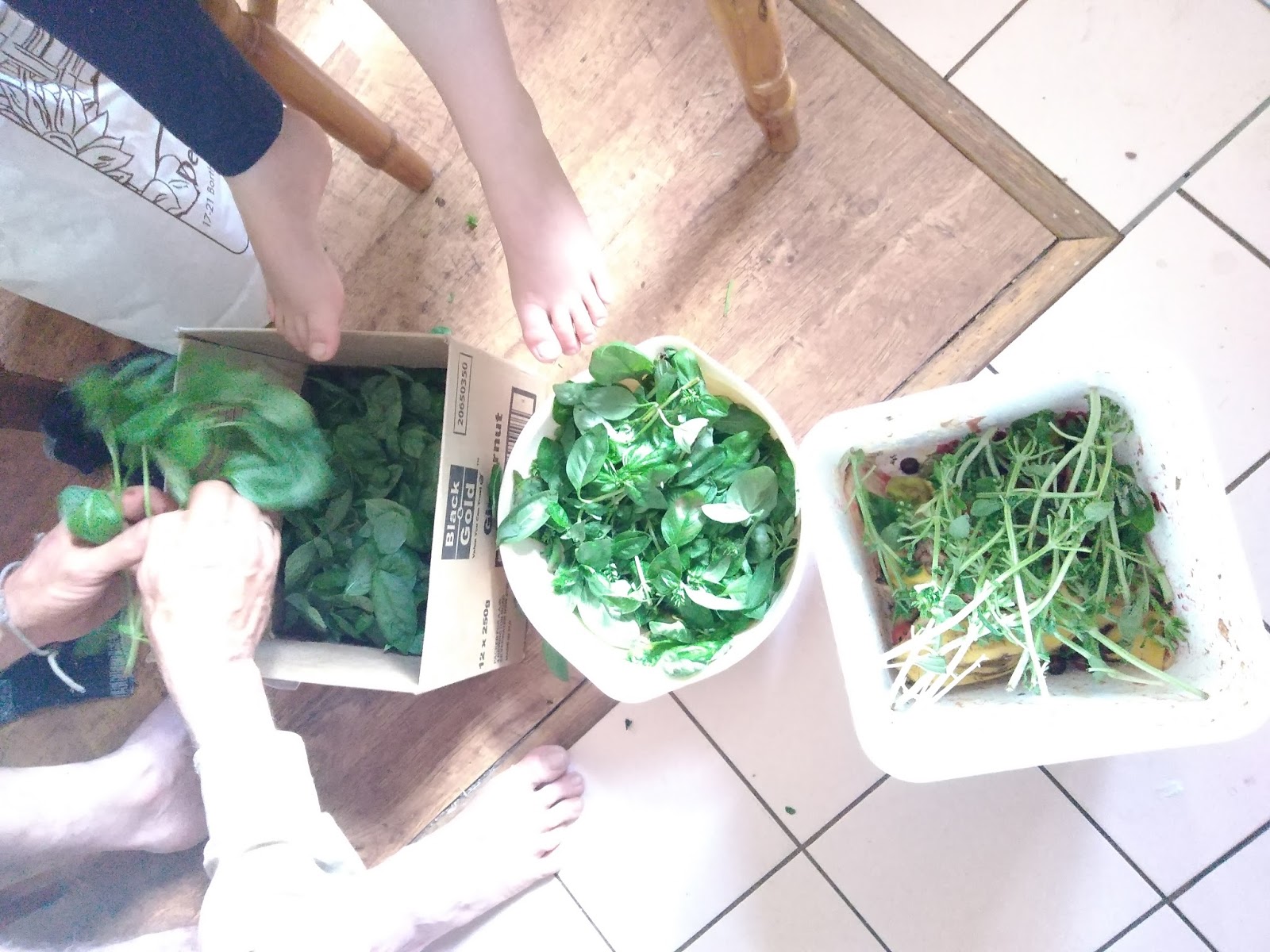
Separating the basil leaves from the stalks.


1/3 cup of pine nuts, 3 cloves of garlic, 1/2 cup of olive oil, 1/2 cup parmesan cheese and lots of basil leaves makes pesto.


Frozen in ice cube trays they make a taste bomb!

Tuesday, January 16, 2018

Week 2 2018


Week 2 2018

This week started really hot, went through thunder and lightning, headed jumper cold with snow down to 1500m and ended in damp drizzle. We pumped up four full tanks of water from the house tank and the dam levels started to go up.

On Monday we collected a WWOOFer from Cooma. Margot, a university student from Paris, was keen to spend some time on the farm and improve her English. WWOOF stands for Willing Workers on Organic Farms and is a great way for travellers to find hosts - free board and lodging in exchange for at least four hours a day labour. I spent many months doing this in Australia, New Zealand and England and learnt a lot. Wwoofers give us the chance to concentrate on a few projects that would be onerous and put off without help and to share our farm and our food with interesting people.


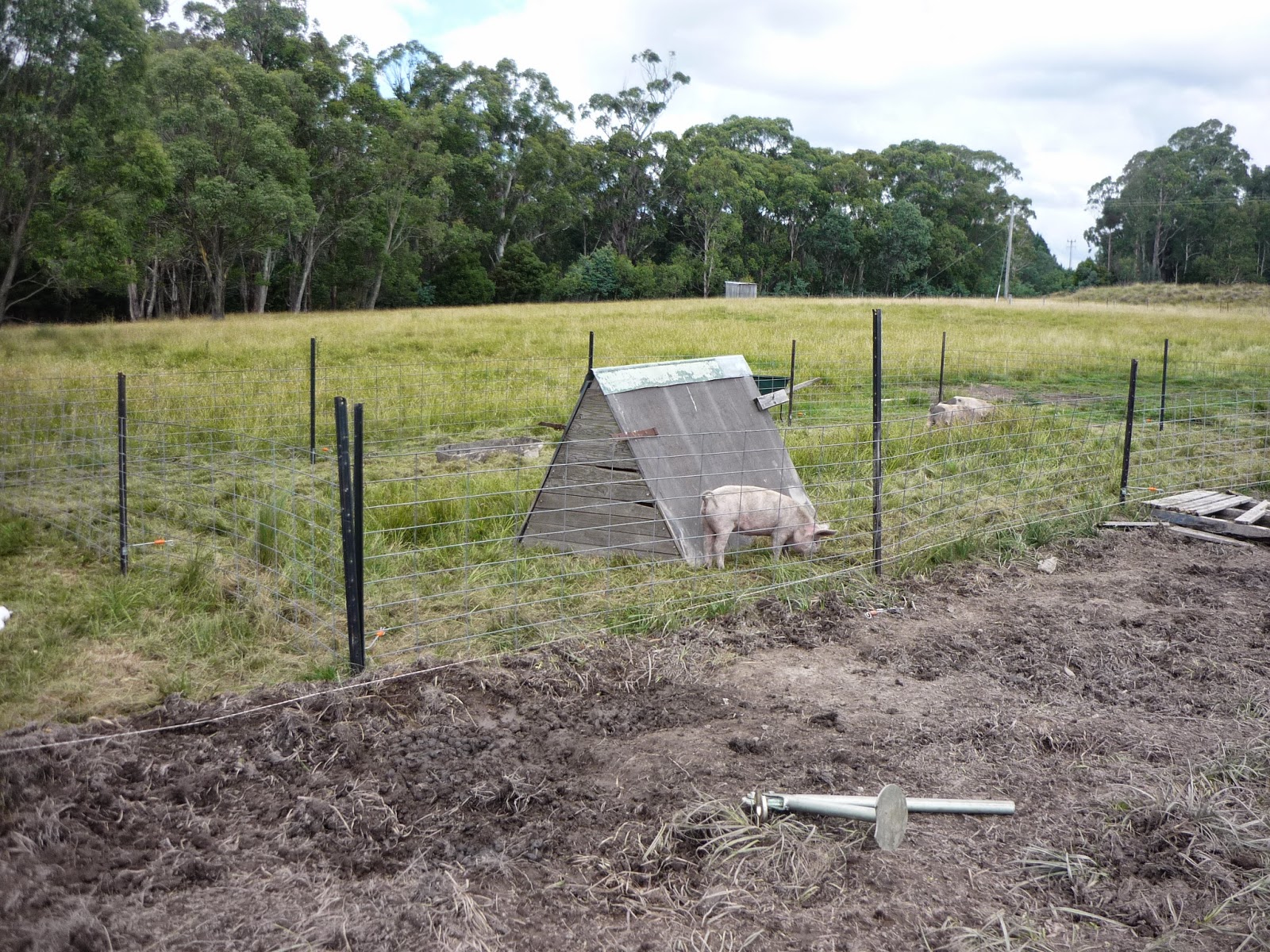
Our two Duroc pigs, Chocolate and Caramel, are no longer piglets and have managed to turn over all the soil in their 12m by 6m pen. It was time to give them a fresh patch. Pigs are homebodies and once they have worked out their patch they can be reluctant to move. They also have a very healthy respect for electric fences so we could remove the outside panels and set them up around the new patch without the pigs escaping. They stayed behind the electric wire until we were almost done. Chocolate is the dominant pig so he went into the new pen happily while we had to chase Caramel to step over the line between old and new pens even though there was no barrier there at all.

The older the pigs get the quicker they turn over the soil and the more often the pen need to be moved. We bought these pigs in November and they are fattening fast - with fallen apples and excess zucchinis gradually replacing the grower pellets. By March they should reach 70 kg and head off for their one bad day.

The next task was to pick the three blackcurrant bushes. With four children and two adults it took about an hour to strip the bushes. We picked just over 4 kg.
 For preserving recipes our go-to book is 'A Year in a Bottle' by Sally Wise and her recipe is:

2 kg blackcurrants, washed, stalks removed
4 cups water
3 kg sugar
60 g butter


After bringing the currants and the water to the boil and cooking for 10 minutes, we added the sugar and cooked until it was dissolved. Then we added the butter and boiled hard until the setting point was reached. 
This made 18 jars (mostly 375 ml ones).

At Opportunity Farm we have four sets of chooks - two in mobile chicken tractors and two in fixed pens. The latter have been used as pens for a long time. Each year we clean them out to remove most of the manure. This manure is very high in nitrogen but needs to be composted before going on the garden. Four full wheelbarrow loads were trundled off to the compost heap and mixed with lawn clippings, waste wool and dried weeds - to be left until spring.


Once the pens were cleaned of poo, we washed down all the walls and surfaces with a dilute solution of a pyrethrum based powder that eradicates and prevents mites. We have only had one outbreak at Opportunity Farm but it seems sensible to be proactive while we are cleaning the pens.

We have been slowly building a shearing shed for our small flock of sheep. The building is almost complete but we need to set up some yards and fencing to direct the sheep into and out of the building. For fencing we needed posts. Our other property has 300 acres of bush and most crucially plenty of red box trees. These have the advantage of being too dense to be eaten by termites and the disadvantage of not being straight. There are plenty of young trees about 20-25cm in diameter. From most such trees it is possible to cut two posts and maybe two stays. The stays are the support posts that angle into the ground from the main post to keep it upright when the fence wires are tightened.


Dropping a Red Box tree to make posts


Trimming the tree to make stays (note the bendy trunk!)

Once the posts were dropped off back at the Farm we dug some holes. Each hole was dug so that a third of each post is in the ground ie a post of 2.1m length goes into a 0.7m hole.

Before we could site all the posts I needed to build a chute. This is a ramp down which the shorn sheep is pushed once shearing has been completed. The chute is about 500mm wide and 1200 high.
I chose to make the ramp out of palings and the walls and roof from corrugated iron. All the components except for the palings came from a collapsed shearing shed a friend allowed us to remove. The round posts were trees cut in the 1950s and now reused 60 years later.
To complete the walls and roof I need some more roofing screws so it will need to be finished later.


Tuesday, May 2, 2017

Oh for a Wwoofer - fencing projects


After 15 months without a Wwoofer, Andre from France comes for a week. Not only is he keen and hardworking but he comes with a car full of tools and a keenness to use them. So it was time for those projects that required two people and some skills in using hammers and screws etc. My new orchard for dwarf apples, pears and cherries has been planted with the trees, had posts and rails fitted for the cage and tin dug in and screwed on. 

The tricky part is to put up the wire on the walls by myself. So with Andre in residence in our retro caravan it was time to tackle this job. First we rolled out the wire on one side and then hung it up on partially screwed in roofing screws. Then we rolled out the next side until we had it loosely placed on three sides. We stretched it tighter and overlapped the corners. Due to the fact that the orchard is sloping downhill and the posts are upright there was a flap in each bottom corner that had to be cut and secured to the post with staples. 
It came up well and looks smooth and secure. 


Next we concreted the door sill. The plan is to keep some guinea pigs in the orchard once it is caged. It is important that no animal can dig its way in or out. The door is recycled from an old shearing shed so it has a solid metal sheet on one side. This will help keep the dogs from looking in and salivating over the guinea pigs. Only the roof to go before it is a protected space for the trees to grow away from the parrots and the cockatoos.


The final job for Andre and I was to build  a fence across one of the chook pens - effectively halving the space but making a new pen. By using extra long star pickets and an old stay to support the door jamb it only meant one major hole to dig - for the post in the middle. Now I just have to build a new chookhouse and a separate flock can be established. 


Oh for a WWoofer  when there are projects to be done. A big thank you to Andre who was a very helpful and competent assistant as well as a pleasure to spend time with.

Tuesday, March 31, 2015

Moving House Chicken Style

The sun was just coming through the autumn mist as I headed out to move one of the chook flocks. We are lucky that such mists seem to clear at Opportunity Farm before much of the surrounding area which provides beautiful views and misty vistas.
 
'The season of mists and mellow fruitfulness'

It looked like the chook tractor was on the edge of a sunny island with a sea of fog below. Last night I went out with a torch and shut the door on the house so that all the chooks were trapped inside. Sometimes the rooster will sleep underneath but the increasing cool must have enticed him in to snuggle up to his ladies.
 

Ready to start with the fence still up
 
The first job was to pull up the fencing. It is 100m of electrified mesh with twenty posts that are meant to be pushed into the ground. The bottom wire of the mesh is not electrified so that the ground does not short out the fence, provided the grass is not too long.

 
To work effectively the fence needs to be a circuit so the two ends are clipped together to ensure the charge crosses the gap. Here the two ends are separated for removal. Each corner is kept taut by a string with a tent peg on the end. These I remove so that they do not tangle with the mesh as it is folded and so that they are handy when needed for reassembling. I collect up the posts folding the mesh in half until I get half way. Then I collect up the other side.
 
The photo below shows all the items needed for our mobile chook run: the folded mesh, a drum for the poultry feed, the solar charger, a steel picket for the charger to sit on, a metal pole for earthing the charger, the green poultry feeder, the automatic waterer and the ladder for the chooks to climb up into the chook house. 

 
All these items are loaded onto the ute, the tyre of the chook house pumped up and then the trailer is attached and dragged into Harley's paddock. He is off with Opal so the chooks can scratch up all the excess hay and horse poo in his shed.

 
 First the trailer is taken off and set up. I use the legs off an old round table to keep the trailer level. The food and water are set up and then I can start to put out the fence. I lay it out roughly and then work from the join  (seen here in the far corner) pushing the posts in as I go. It is easiest if the shape of the run is rectangular but any shape is possible provided you have enough string and pegs for each change in direction. If the ground is uneven then the bottom wire can be pegged down.

 
Once the fence is all set up then the charger and earth posts are banged in and the power connected up. All that remains to do is to open the hatch and watch the chooks explore their new run. By having such mobile chooks it saves on permanent fencing, allows the chooks to scratch up waste and worms from other animals, reduces compaction and gives the chooks a chance to get fresh green grass.  

Sunday, March 15, 2015

Naughty little Kids

We have seven little kids from last spring. They are in our original goat paddock along with one doe who had a very late buck kid in November. They have a great shed, good access to water, some rocks/bricks to smooth off their hooves and a two strand electric fence attached inside the original boundary fence.
For the past few years we have kept goats in this paddock. It is split in two so that we can rest one side for a while. We have also put chickens in to scratch up the dung and eat the worms.
After a fantastic season with plenty of grass it is finally browning off and the rate of growth is slowing. The kids have been getting hungry. I feed them sheep nuts but it doesn't go far amongst eight eager mouths.
The grass around the perimeter has been getting longer and has begun to short out the fence. Now two of the kids have worked out that if they push quickly through the fence they can reach more grass and the kick from the fence is not enough to put them off.

 
Once they have a taste for escape they can be pretty persistent and will teach all the others. If I don't stop them now I could have a paddock that is useless for keeping in goats and a whole bunch of kids wandering around in the wrong places. Curly will probably get wind of them and then we may have problems with kid kidding too young.


We don't have enough hinge-joint fencing to block off the whole side where the kids have been escaping so I try to fool them with a temporary section that covers their initial escape route. It may fool them for a while but more money will be needed for fencing wire and supplementary feed to ensure that the problem is solved.

Two hours later the kids are out again. They are small enough to force their way through the holes in the hinge-joint mesh. A combination of keen kelpie and angry farmer might have chased them back again but another strategy is needed!

Sunday, February 15, 2015

Playing Chess with Pigs

The abundance of fruit this year has been excellent for raising pigs. They have gorged themselves on overripe stonefruit and fallen apples. They squeal as the juices dribble down their chins. The peaches they eat like lollies sucking all the flesh off and spitting out the stones.
When they are not eating the food thrown over the fence into their food trough they are either asleep in their little house or scrimmaging about in the pen.
The rain has kept falling and where there is rain and pigs there is mud. Their enclosure was starting to look more like the Somme than a section of grazed paddock. So they needed to move on to pastures new.
While all the pigs we have had seem to respect a single strand of periodically live wire, the thought of having to chase down three excited escapees means that changing their pen needs to be worked out carefully. I have eight panels which are all in use to make a 3x1 rectangle (18m by 6m).
Luckily for me there is a hinge joint fence along one side that will hold them. It was not enough on the night they arrived when two of them ran straight through it and launched a wild pig chase of epic scope and direction. Their increased size and docility means I am pretty sure I can risk it.
Move 1 is to get the three panels from next to the fence and attach them together with fresh star pickets to make two sides of a 2 x 1 rectangle. We use outriggers to string the electric on. The first year we used clips which brings the wire closer to the panels but we found them much harder to undo.
Move 2 is to open up a panel into the new area and use it to make the third side of the rectangle. Only Maud crossed the line, though once I had lugged their house and food trough over the line the other two took the plunge and spread out into the newly mowed section that actually had grass to eat.
After that I could move one of the excess panels to shut the gap where they crossed and reverse the star pickets on that side. Every time I entered the pen to attach an outrigger or move some wire the pigs would nibble on my boots, shirt, trousers or even back. Disconcerting but just exploration for animals without fingers to touch with.
 
Once the solar electric was moved over the pigs were safe in their new quarters and I could start to fill in some of their diggings. It took a couple of hours but I'd rather be sure they stayed in. 

Checkmate.

Saturday, February 7, 2015

A Glorious Day

6.30am on a school weekday finds me porridging in the kitchen, wrestling with packed lunches and devising new ways to encourage small humans to arise and face the day - preferably with school uniform on.
Winters at Opportunity Farm can be long and each morning the fire needs tending and the house warming before there is much success at getting the others up. That's why some summer weekend days it is great to leap out of bed, throw on some clothes and head out the door before anyone else is up.
This morning the dew was heavy and glistening as I walked up through the paddock. The final section of fence where I have been adding Hinge Joint to keep the goats in was beckoning. At our corner post there is a stile over which the human kids climb on their way to catch their bus to their NSW school. I climbed over to tie on the wire and looked back over Opportunity Farm and soaked up the sights and sounds. There were lots of sounds. The separated goat kids and mums were still calling to each other, the dogs were barking, the calf was asking for his mother back and the birds were announcing that it was a beautiful day. I tried to capture this natural cacophony but my camera is old fashioned technology and decent sound was beyond it.
Opportunity Farm from its SE corner
Once I had secured and tightened the fence with Gripples the sun had dried the dew and heat was promising much. Time for breakfast and the morning chores and to chase those children out of bed.
More apples to dry, the air conditioner to build into the wall of the hanging shed and some shelves to put up in the pantry. Outside jobs but out of the sun.
The girls wanted to ride. Opal didn't think this was such a good idea and ran away when approached with a leadrope. She was finally cornered and the tacking up could commence. She snorted and stamped but submitted to the indignity and discomfort of being saddled. It was a fine day for a ride but progress was painfully slow. Harley just wanted to put his head down and eat. My six-year old daughter just isn't strong enough to pull his head up as often as he wants to put it down for another mouthful. Opal would walk for a bit and then stand still despite being spurred on by an enthusiastic though not strong girl on her back. Still as long as I was there to encourage all four of them the walk progressed. I have no experience with horses and am in the dark about most equine activities.
 As a child my older sister was keen on horses and helped out at a stables for a while. This came to an abrupt end when we were sheltering from the wind and rain at a Welsh lake. To our amazement a Mr.Whippy van made it up the hill to the almost empty car park tootling 'Greensleeves'.Taking pity on the entrepreneurial or simply dim ice-cream man we purchased some 99 cones. The Welsh Mountain ponies obviously knew the van as a source of food and approached us for a lick. When my sister turned her back on the pony to protect her icecream it was so offended it took a chunk out of her back. Horses were off the agenda after that.
 Anyway I am happy to encourage pony riding and to see the joy on my girls' faces makes it a very worthwhile project.
   
 The day ended with a thunderstorm and downpour that cleared the air and watered the gardens. Only three more summer weekends to go. I hope they are all as glorious as this one.

Wednesday, January 28, 2015

Why do we have Goats?

When we bought Opportunity Farm it came with good fences and a flock of Wiltshire Horn sheep. The four paddocks were large, three had a dam and all had camps or remnant vegetation for shade and shelter. If we had stuck to sheep there would have been very little infrastructure needed. So why did we get goats?

Goats challenge fences. If there is a small gap or a hollow under the fence, a goat will explore the other side. For goats, the grass is always greener. They climb, they push and they ignore a little scratch from barbed wire if they can get fresh greens. They respect electric fencing but will keep testing to check it is on.
Goats are mountain creatures who are designed to roam a large area eating a very wide range of greenery - mainly different bushes and leaves. If they have trees in their paddock they will strip them of leaves and devour the bark until they are ring-barked.

It started with a desire for goat's milk and a phone call from a friend with a rejected kid needing someone mad enough to get up three times a night to bottle feed it. It seems that there are a lot of people who know we are suckers for that sort of a deal. We had just gained a poddy lamb so the two of them could grow up together and become pets. Then another 'friend' had an excess kid and the goat herd started. We bought a goat and kid who might have been a 'milker' but it was hard work to retrain her for not much milk. A Boer buck that had sore feet from wet pasture moved in because our goat paddock was drier and he stayed. The does had kids and then they and their kids had kids. Another cast off too good to miss and we have a herd of seventeen goats - three bucks, a wether and thirteen does.
We are supposed to eat the surplus kids but this doesn't happen as fast as the kids arrive. By the time they are dispatched they are more mature than preferred so the meat needs slow cooking!

Meantime the initial paddock became electrified - first solar then mains - with wire and outriggers and clamps and porcelain connectors. New skills and a new language to learn. A goat shed was constructed with a hay store, milking stand and a 'jug'. Three other paddocks were subdivided off and the electric infrastructure put in. Isolated trees were fenced out or in. It's a lot of work and expense for a few roasts.
Still the goat expansion increased until one mob needed to use one of the large paddocks. It worked well for a while but eventually the single strands of barb and wire were tested and the goats were getting out. Time to encircle it - and the stand of trees in the middle - with hinge joint. Three 200m rolls of wire at $260 a pop and plenty of tie wire and staples. It's a big job but once it is complete the goats will stay in and the boundary will be secure for a long time.

Today's completed fenceline - only 100m to go!
 
So why do we have goats and have all this hassle and expense? I reckon it is because goats have personality, intelligence and a zest for life that sheep just don't have. It may also be because we are suckers for a reject but one day.... one day we might get a decent milking goat, eat the excess kids when they are tasty and have a farm secured with goat-proof fences. Until then I'll keep on fencing. I think the goats are here to stay.

One of our herds with Cedric, the Boer buck, on the right.

Tuesday, January 20, 2015

Slow Tractor Work

Our slowest tractor is the pig tractor. Our three piglets, Blanche, Petunia and Maud, are sisters with surprisingly different looks. It helps to be able to tell the difference. We bought them when they were ten weeks old and they will live off scraps and pig nuts until about the end of March when they reach a good weight for a trip to the abattoir in Orbost.


I really like pigs. For the next few months - twice a day - I get to commune with my porcine friends. When I call out to them when I approach with a high-pitched "Piggy, Piggy, Piggy!" they squeal with delight and start to run up and down their enclosure. They throw their heads back with excitement and once I step over the fence they start to nibble at my trouser legs, boots and anything they can reach. I always regret it if I approach wearing crocs!
The food is poured into their trough and they snort and squeal and snuffle, then run back to me to see if they is anything else on offer, then back to ecstasy of devouring.
Pigs are very friendly, intelligent and curious animals. Their eyes are very expressive and seem almost human. I have to wait for several minutes while their water container fills up and I enjoy observing them. Their little tails straighten, twirl and wave while their soft noses are constantly checking out their surroundings.
We have sited them in a boggy corner of a paddock which is filled with tussock and cutty grass. The idea is that over time the pigs rooting and the added manure will improve the vegetation growing there. This is the third year we have fattened piglets and where we have placed their enclosure in the past is growing good grass, a few thistles and is greatly favoured by the goats.
The enclosure is made of 6m lengths of mesh, tie-wired to star pickets and lined with a single electric strand from a solar powered energizer. We used to only have four lengths and so we moved them every three weeks or so. This year we have eight so the space is three times as large.
Today was the first time we moved the enclosure in eight weeks. By moving the one end length in it frees enough lengths to set up a new section on the other end. The pigs stay put but once they have fresh soil to turn and grass to eat the heads go down and the tails wag.
This move should keep them happy 'as a pig in shit' for a few weeks. It's slow work to improve the pasture but I can't think of a more joyful way to do it.


Sunday, January 18, 2015

Moving the Tractor

There are quite a number of tractors on Opportunity Farm apart from Michelle's red Fergie. This morning we had to move our chook tractor. This is its story:
A friend was cleaning up and asked me to tow an old trailer full of rubbish and leave it at the tip. It hadn't moved in a decade and the tyres were flat. Pumped up they looked good for the windy 35km trip to the tip. Once I had sorted what was really rubbish and what might be useful the trailer still looked good. So I took the trailer home to become a new mobile home for some of our chooks.


The angle-grinder cut out the steel bottom and this was replaced with steel mesh so the chook shit would fall through and fertilise the ground. Then I built a chook house on the top fully equipped with bi-level perches, nesting box accessed from outside, sliding lockable door for chook entry set in a larger hinged door for human entry and a ladder to assist the tired hen to get home.  

Surrounded by a 100m roll out electric chook netting fence, powered by a solar energizer, it is so far fox and dog-proof and contains the chooks (provided one wing is clipped).

We target the chooks in places where the larger animals have been. The chooks clean up the shit and they get rid of the worms. Once the chook tractor has moved on the animals can move back. The chooks get fresh pasture and fresh bugs as well as their layer mix and we get lots of eggs and clean paddocks.

In the photo you can also see another of our tractors - the pig tractor. Not all tractors need diesel!

Sunday, January 4, 2015

Get a Grippler

This afternoon was spent putting up five strands of plain wire around what we call the 'grove' - a collection of fodder, fruit and nut trees in the middle of a paddock. Goats are wonderful intelligent animals but they like to eat trees and they like to work out a way of getting through fences. Our initial electric fence kept them at bay for a while but those green leaf shoots proved to be too tempting to Cedric, our Boer buck. So it was back to the drawing board, out with the chainsaw and down with enough Red Box trees for six posts and stays.
I like fencing and have been doing it now and again for almost thirty years. But what has made the job so much more enjoyable and it so much easier to get a tight fence was using a Gripple tool. No more sagging wires when one wire is over-tightened. No more figure of eight joins in the middle of the run. The job is done quickly and effectively in half the time. I can recall spending hours digging out star pickets before I had a post remover or wielding a sledgehammer above head height to knock in the picket before I had a 'banger'. While it is hard to contemplate going without those 'new' technologies my favourite is the Gripple tool. Slip the two ends of wire needing joining in either side of the Gripple and use the tool to pull the wire through till it is tight. Simple and very effective - works every time. Can be retightened at any time and even loosened off if required.
In the packet of Gripples there are some plastic pieces called 'twisters'. Until today they were ignored and thrown out with the wrapper. Now I have discovered they make a great way of holding together the cut ends so that they are not a hazard to the stock. There is always something to learn on the farm. Get a Grippler!
'New Technology for easy fencing - Post remover,  Gripple Tool and 'Banger'

The Gripple with a Twist at the end.